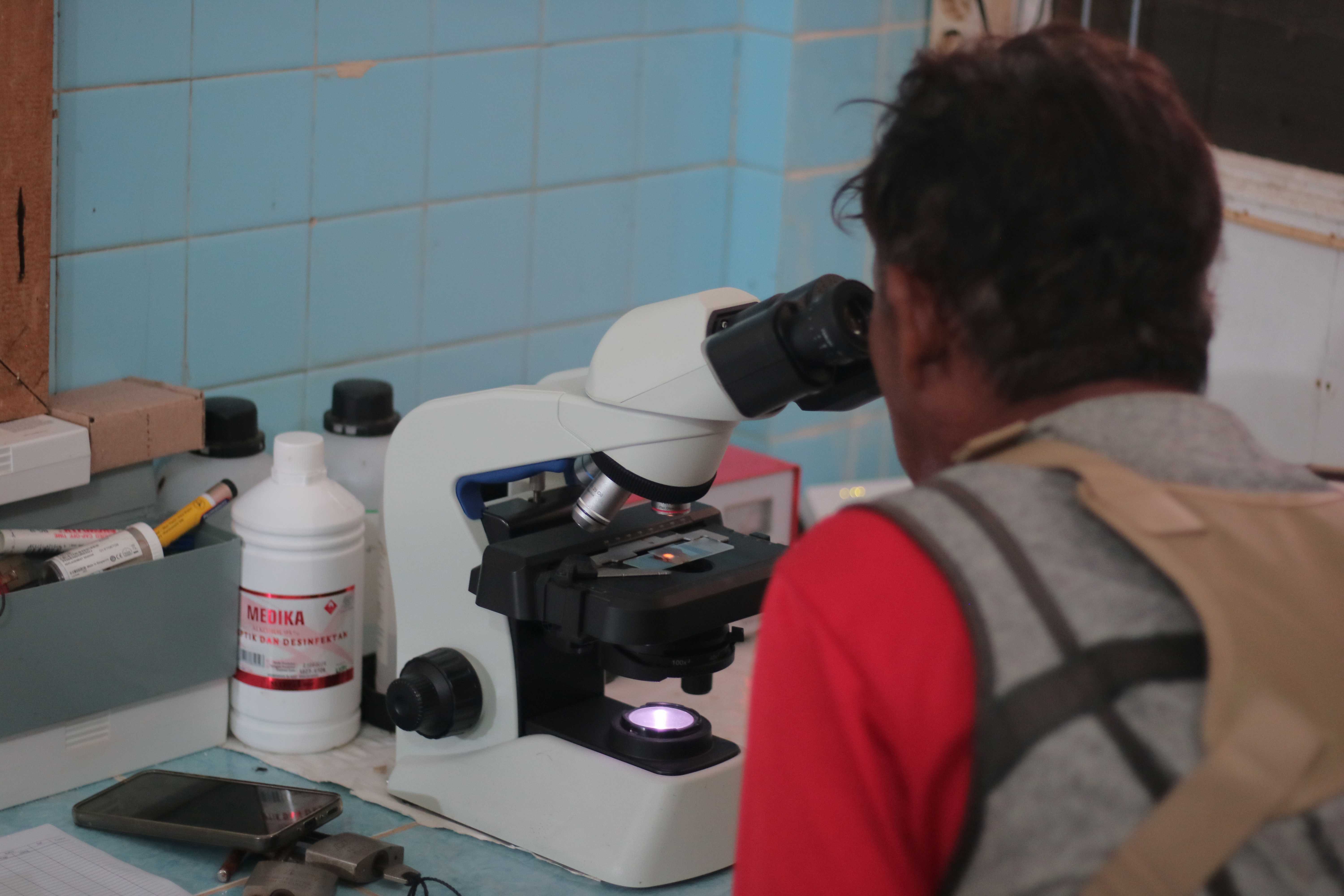
Penyakit masih menjadi momok utama budidaya udang di Indonesia. Sekali wabah penyakit merebak, kerugiannya bisa mencapai ratusan juta rupiah dalam hitungan minggu. Di sisi lain, karakter budidaya udang di Indonesia, dengan tipikal kolam-kolam terbuka, membuat kondisi tambak menjadi sangat dinamis—baik dari sisi biologi udang maupun kondisi lingkungan— dan menuntut para petambak untuk tetap waspada. Perubahan kecil pada kualitas air atau kesehatan udang bisa menjadi penentu apakah udang bisa dipanen sesuai target atau terpaksa panen dini karena tidak bisa diselamatkan.
Karena kondisi ini lah peran laboratorium di tambak menjadi semakin penting. Laboratorium bukan hanya tempat untuk menguji sampel air atau mendiagnosis penyakit, tetapi juga sebagai catatan data yang bisa membantu petambak mengambil keputusan dengan lebih presisi.
Salah satu kunci keberhasilan budidaya udang adalah konsistensi pemantauan. Kualitas air seperti pH, DO (dissolved oxygen), salinitas, dan amonia harus selalu dicek secara rutin. Ketika parameter mulai berfluktuasi secara terlalu lebar, tindakan korektif harus segera dilakukan. Tanpa data laboratorium, perubahan-perubahan ini sering kali baru disadari setelah udang menunjukkan gejala stres, gejala klinis penyakit, atau bahkan kematian massal.
Selain memantau kualitas air, laboratorium juga berperan penting dalam pemeriksaan kesehatan udang. Tes PCR (Polymerase Chain Reaction) misalnya, dapat mendeteksi keberadaan patogen seperti AHPND, WSSV, EHP, dan sebagainya, sejak masa-masa awal. PCR modern bahkan bisa mendeteksi beberapa penyakit sekaligus. Dengan deteksi dini, petambak bisa mengambil langkah cepat—misalnya dengan penambahan probiotik, feed additive untuk imun, maupun input produksi lainnya.
Laboratorium juga menjadi sumber data historis yang berharga. Ketika hasil sampling dicatat dan dianalisis secara berkala, pola perubahan lingkungan dan kesehatan udang bisa dipelajari. Misalnya, peningkatan amonia yang berulang pada umur tertentu bisa menunjukkan perlunya evaluasi manajemen pakan atau aerasi. Dengan data yang lengkap, keputusan tidak lagi diambil berdasarkan perkiraan atau intuisi, tapi berbasis data real di lapangan.
Ke depan, peran laboratorium di tambak udang akan semakin strategis. Integrasi hasil uji laboratorium dengan sistem digital dan sensor otomatis bisa menciptakan sistem pemantauan real-time yang membantu pengambilan keputusan lebih cepat. Dengan begitu, laboratorium bukan hanya alat pendukung, tetapi bagian dari sistem manajemen produksi yang terintegrasi.
Budidaya udang adalah aktivitas usaha berbasis sain dan bisa dilakukan secara presisi. Setiap parameter, baik kualitas air maupun kesehatan udang, harus dikelola dengan data yang akurat. Pada akhirnya, laboratorium bukan sekadar ruang dengan mikroskop dan alat uji, tetapi benteng pertama untuk menjaga ketahanan produksi udang dari ancaman penyakit dan ketidakpastian lingkungan.

Manfaatkan Laboratorium Eksternal
Meski keberadaan laboratorium di tambak sangat penting, tidak semua tambak memiliki fasilitas lab sendiri. Bagi petambak yang belum mampu berinvestasi, ada banyak alternatif layanan yang bisa dimanfaatkan.
Saat ini, sejumlah perusahaan menyediakan layanan laboratorium berbayar untuk pengecekan kualitas air maupun kesehatan udang. Investasi alat PCR misalnya, memang tergolong sangat mahal, tetapi petambak bisa memanfaatkan layanan pengecekan PCR yang ditawarkan oleh penyedia seperti PT Sakti Biru Indonesia (SBI). Melalui layanan ini, petambak tetap dapat memantau kondisi udang dengan hasil uji yang akurat tanpa harus memiliki alat sendiri.
Selain itu, beberapa perusahaan pakan juga menyediakan layanan sampling bagi pelanggan mereka. Layanan ini biasanya mencakup analisis di laboratorium internal perusahaan atau melalui laboratorium keliling yang langsung mendatangi tambak. Dukungan semacam ini membantu petambak untuk tetap mendapatkan data valid secara berkala tanpa perlu menanggung biaya tinggi untuk peralatan laboratorium.