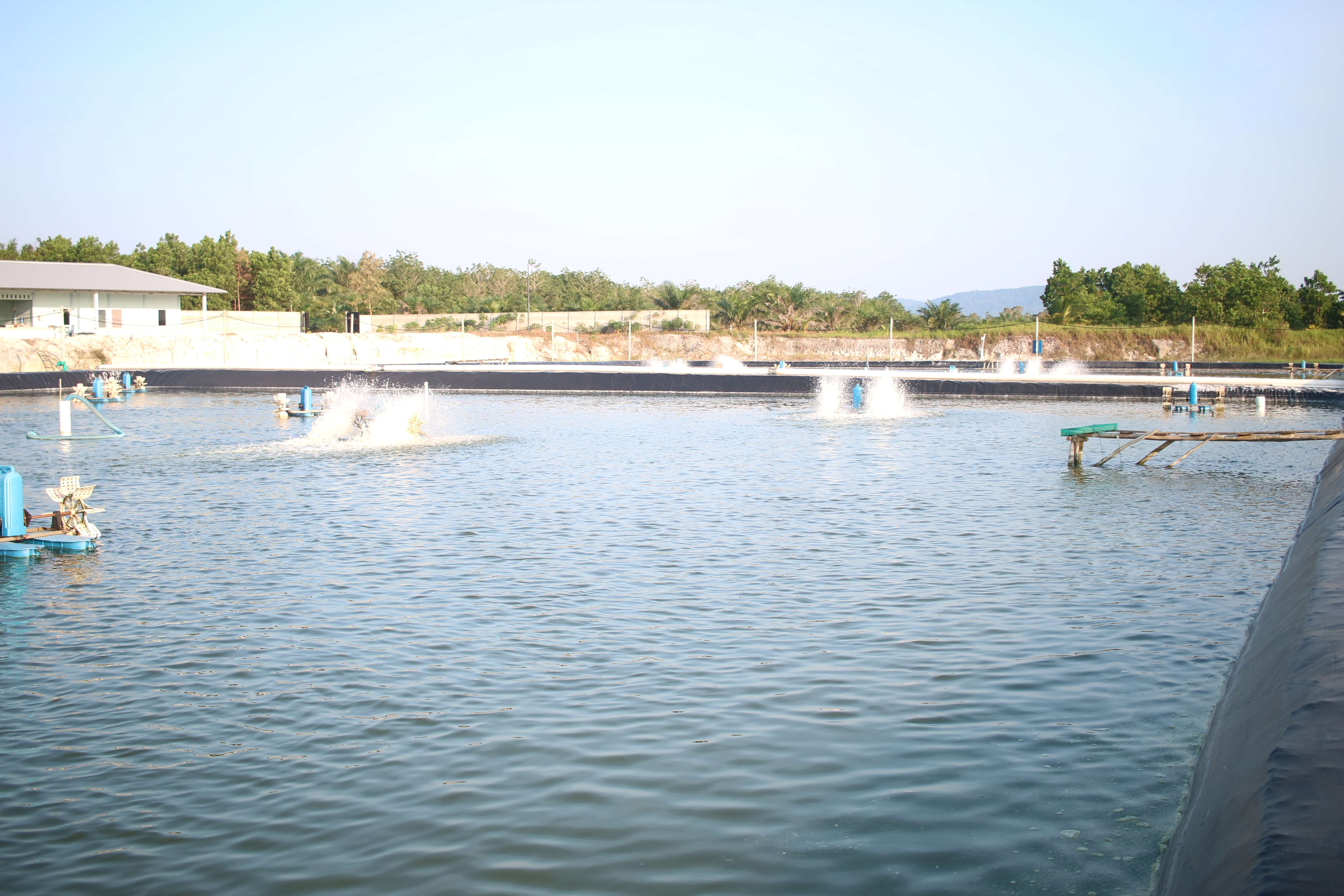
In shrimp farming, shrimp pond carrying capacity is a fundamental concept that determines how much shrimp a pond can sustain without causing ecological disturbance or environmental degradation. Simply put, carrying capacity refers to the maximum number of shrimp that can be raised in a given pond or area, depending on geographical conditions, environmental quality, and the technology applied.
Carrying capacity is not merely about stocking density, it reflects the balance between inputs such as feed and oxygen, and the pond system’s ability to process resulting wastes. When this balance is maintained, the pond operates efficiently and sustainably. Once it is exceeded, however, water quality deteriorates rapidly, shrimp experience stress, and disease outbreaks become more likely.
Below are the key factors that determine a shrimp pond’s carrying capacity:
1. Feed and Culture Medium
Feed is the primary determinant of shrimp pond carrying capacity. Shrimp farming systems that rely solely on natural feed have a much lower carrying capacity than those using formulated feed (pellets). This is because the natural productivity of a pond depends on the limited availability of plankton and microorganisms in the water.
For example, a traditional pond without supplemental feed typically produces only around 500 kilograms of shrimp per hectare per cycle. Once farmers begin to supply commercial feed regularly, the pond’s carrying capacity increases significantly, as shrimp no longer depend entirely on natural food sources.
However, increasing feed input must go hand in hand with proper water quality management. Excess or uneaten feed decomposes into organic waste, raising ammonia levels and oxygen demand. Therefore, feeding must be done precisely, matching shrimp growth needs and the pond’s waste-handling capacity.
2. Dissolved Oxygen (DO)
After feed, dissolved oxygen (DO) is the second most critical factor affecting carrying capacity. Adequate oxygen allows shrimp to remain active and grow optimally, while also supporting a pond system that can sustain higher biomass. Ideally, DO levels should not fall below 3 mg/L, and in intensive systems, should be maintained above 4–5 mg/L.
In traditional ponds, oxygen supply relies mainly on natural processes such as phytoplankton photosynthesis and air diffusion. In contrast, semi-intensive to super-intensive ponds use aerators or paddlewheels to maintain water circulation and mechanically increase oxygen. With proper aeration, a pond’s carrying capacity can rise from a few hundred kilograms to several tons per hectare.
Of course, this improvement comes at a cost. Each additional aerator increases energy consumption and maintenance requirements, but the benefits—greater system stability and higher productivity—often outweigh the expenses.
3. Technological Application
Another major determinant is the level of technology used. Two ponds of similar size and location may have very different carrying capacities depending on the farming technology applied.
Traditional systems rely mainly on natural nutrient cycles. However, with modern technologies such as biofloc, recirculating aquaculture systems (RAS), or heterotrophic systems, feed efficiency and waste management improve significantly. These technologies enable much higher stocking densities while minimizing water quality deterioration.
That said, technological advancement always comes with higher capital and operational costs. Each farm must adjust its technology adoption to match its financial capacity and management capability. Sophisticated systems without proper management can actually reduce efficiency and increase the risk of crop failure.
4. Environmental Quality
Beyond internal pond management, external environmental quality also plays a major role. The water source used for production is often affected by industrial, agricultural, livestock, or domestic activities nearby. Pollution from heavy metals, pesticides, or excess organic matter can degrade baseline water quality and significantly reduce carrying capacity.
For instance, coastal waters along northern Java differ greatly from those along southern Java or the more pristine islands of eastern Indonesia. In areas with high human activity, natural carrying capacity tends to be lower. However, this can be partly mitigated through effective water treatment systems, such as settling ponds, biofilters, probiotics, and disinfection before water enters the culture pond.
While technical measures can enhance carrying capacity, long-term sustainability depends on environmental rehabilitation. Even high-tech ponds cannot thrive if their primary water source is heavily polluted.
5. Disease History
The final factor, often underestimated, is the disease history of a shrimp farming area. Unlike environmental quality, which is largely external, this factor is shaped by farming practices themselves. Areas that have been farmed intensively for many years tend to have a higher pathogen load—from bacteria, viruses, or parasites—that can persist in pond sediments or water systems.
These pathogens can serve as latent infection sources for subsequent production cycles. Consequently, even with the same level of technology and management, newly developed pond areas generally have a higher carrying capacity than older, disease-prone zones.
To minimize such risks, strict biosecurity is essential. Pond disinfection, control of personnel and equipment movement, and the use of SPF (Specific Pathogen-Free) post-larvae are critical strategies to maintain the biological carrying capacity of shrimp ponds.
Conclusion
Determining and maintaining pond carrying capacity is a dynamic process influenced by multiple interconnected factors—feed, oxygen, technology, environmental conditions, and disease history. There is no one-size-fits-all approach; every site has its own characteristics requiring specific management strategies.
Still, one universal principle remains: carrying capacity must be preserved to ensure both productivity and sustainability. By understanding and gradually optimizing these key factors, shrimp farmers can increase yields without compromising environmental balance.
Ultimately, this is the essence of modern shrimp aquaculture which is economically efficient, yet environmentally responsible.