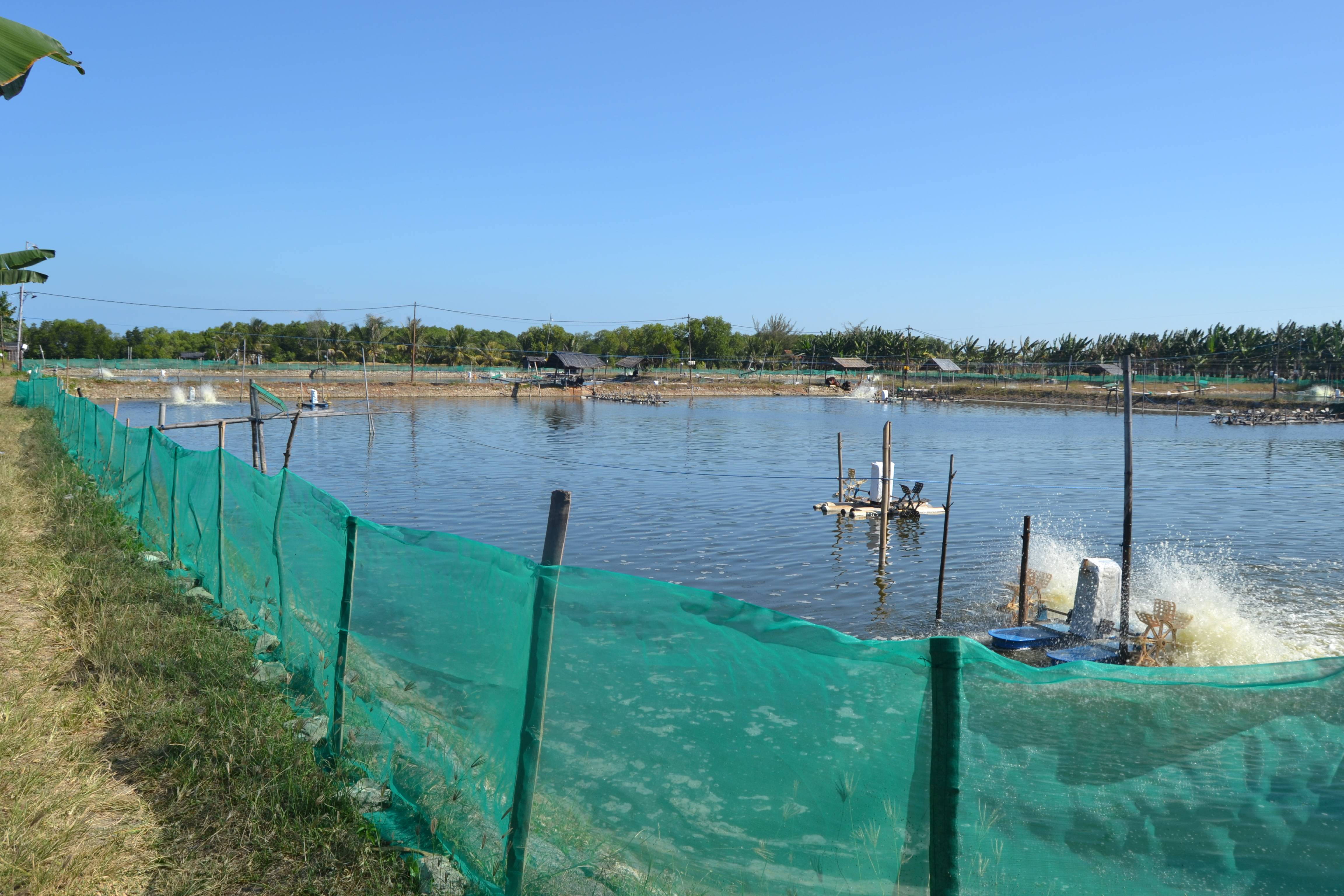
In shrimp farming, water quality is often the deciding factor between a successful harvest and costly crop failure. Among the many water quality parameters, pond alkalinity is often considered a "hidden parameter" that receives far less attention than it deserves, despite playing a critical role in maintaining a stable pond ecosystem. Simply put, alkalinity refers to the water's ability to neutralize acids and prevent excessive fluctuations in pH.
How Alkalinity Works as a Natural Buffer
Alkalinity acts as a natural buffering system that stabilizes pond pH. During the day, phytoplankton photosynthesis consumes carbon dioxide (CO₂), causing pH to rise. At night, respiration releases CO₂ back into the water, lowering the pH. Without sufficient alkalinity, these daily biological processes can trigger dramatic pH swings, leading to stress, reduced growth, and a higher risk of disease in shrimp.
Maintaining adequate alkalinity helps keep daily pH fluctuations within a safe range—ideally no more than 0.5 pH units per day—creating a more stable environment for shrimp culture.
Beyond pH stabilization, alkalinity serves two other essential functions. First, it plays a direct role in the molting process. Shrimp rely on carbonate minerals dissolved in the water to build and harden their new shells after molting. When alkalinity is too low, shrimp may experience prolonged soft-shell conditions, making them more vulnerable to cannibalism and disease.
Second, alkalinity provides inorganic carbon that serves as a vital resource for nitrifying bacteria. These beneficial microorganisms convert toxic ammonia into less harmful nitrogen compounds, helping maintain good water quality and protecting shrimp health.
Ideal Alkalinity Levels for Different Farming Systems
The optimal alkalinity level depends largely on the intensity of the farming system. In general, a range of 100–150 ppm is considered ideal for most shrimp ponds. However, super-intensive systems with high stocking densities often require alkalinity levels above 150 ppm to support greater biological activity and organic loads. In contrast, traditional ponds typically perform well with alkalinity between 80–100 ppm.
Indonesia's Ministry of Marine Affairs and Fisheries, through Ministerial Regulation (PERMEN KP) No. 75 of 2016, recommends a general alkalinity range of 80–150 ppm for shrimp culture.
Managing Pond Alkalinity
Effective alkalinity management requires close monitoring, as alkalinity can decline rapidly due to environmental factors—particularly rainfall. Because rainwater is naturally acidic, heavy rainfall can dilute carbonate minerals in the pond and cause alkalinity to drop, often resulting in a sudden decline in pH.
Routine monitoring using reliable testing equipment is therefore essential for detecting changes before they affect shrimp performance.
When alkalinity falls below the recommended level, farmers should apply agricultural lime to restore it. Dolomite lime (CaMg(CO₃)₂) is often the preferred choice because it not only increases alkalinity and water hardness but also supplies calcium and magnesium, two minerals that are essential for shrimp physiology and shell formation.
Calcium carbonate (CaCO₃) is another effective option for maintaining alkalinity and improving water stability, as it raises alkalinity without causing the rapid increase in pH that can occur with quicklime.
Conclusion
Maintaining optimal pond alkalinity is more than just a routine management practice—it is an investment in shrimp health and production. Adequate alkalinity helps stabilize pH, supports successful molting, sustains beneficial nitrifying bacteria, and creates a healthier pond environment. By keeping alkalinity within the recommended range, farmers can reduce stress, improve survival and growth, and maximize the chances of a successful harvest.